OpenCode Go Review 2026: 18 AI Models for $10/Month (GPT 5.6 Luna, Kimi K3)
OpenCode Go review after 3 weeks of daily use. One API key, 18 models including GPT 5.6 Luna, Kimi K3, and DeepSeek V4 Pro. Works with Hermes, OpenClaw, Pi Agent. $5 first month.
 Dragos9 min read
I have been juggling API keys for coding agents for months. DeepSeek here, MiniMax there, OpenRouter balance to top up, three billing pages I forget which password goes to. It works. It is still annoying.
OpenCode Go is basically one $10/month key ($5 the first month) for 18 models: GPT 5.6 Luna, Grok 4.5, Kimi K3, GLM-5.2, Qwen3.8 Max, DeepSeek V4, MiniMax M3, and a pile of cheaper options. It plugs into OpenCode, Hermes, OpenClaw, Pi, or anything that speaks OpenAI-compatible APIs.
I almost skipped it. Another subscription. Another thing to cancel later. At $10 I figured I would burn a week and move on if it sucked. Three weeks later I am still on it. Here is the honest version.
Get $5 in Free CreditsWhat OpenCode Go is
OpenCode Go is a flat subscription from the OpenCode team: one API key, 18 models, $10/month after a $5 first month. No per-token math. No separate accounts at every model provider.
Models are served from the US, EU, and Singapore. Most providers claim zero retention, so your code is not supposed to train anyone’s next model. The exceptions are Grok 4.5 and GPT 5.6 Luna, which keep logs for 30 days. That matters if you ship proprietary work.
You do not need OpenCode the IDE to use Go. Point any OpenAI-compatible client at the endpoint: Hermes Agent, OpenClaw, Pi Agent, Mastra, Agno, Codex, whatever you already run.
Try OpenCode GoWhich models are included
The current list (18 models):
| Model | Notes |
|---|---|
| GPT 5.6 Luna | Newest arrival; OpenAI’s cheapest tier, strong on hard tasks |
| Grok 4.5 | Strong on hard tasks, but the quota burns fast (use sparingly) |
| Kimi K3 | New Moonshot flagship; good at code, few requests per cap |
| GLM-5.2 | Zhipu’s current flagship for coding agents |
| GLM-5.1 | Previous GLM, same usage tier as 5.2 |
| Kimi K2.7 Code | Coding-tuned Kimi with way more requests than K3 |
| Kimi K2.6 | Fine daily driver if you do not need K3 |
| MiMo-V2.5-Pro | Stronger Xiaomi coding model |
| MiMo-V2.5 | Cheap and high request count |
| MiniMax M3 | Solid agentic workhorse |
| MiniMax M2.7 | Still my default for day-to-day agent work |
| Qwen3.8 Max | Newest Qwen tier, very few requests per cap |
| Qwen3.7 Max | Previous Qwen top tier |
| Qwen3.7 Plus | Middle Qwen 3.7 option |
| Qwen3.6 Plus | Older Qwen, still usable |
| DeepSeek V4 Pro | Strong general coding, long context |
| DeepSeek V4 Flash | Fast and cheap for quick jobs |
| Hy3 | High request count open coding model |
GPT 5.6 Luna and Qwen3.8 Max are live
The two newest additions are GPT 5.6 Luna (OpenAI’s budget tier) and Qwen3.8 Max. They join Grok 4.5 and Kimi K3 on the $15 tier — about $15 of included usage per month instead of $60 like most of the roster. You will feel that on the 5-hour cap. I keep them for the hard problems and burn MiniMax, DeepSeek Flash, or MiMo when I am grinding through volume. Run /models in OpenCode if the list has shifted again.
OpenCode does not dump every new model onto Go. They test for coding-agent use first, then add what holds up. The list will keep moving.
Usage limits
Go is not unlimited. It uses dollar-value limits, not request counts. Your actual number of requests depends on which model you pick.
| Limit | Cap |
|---|---|
| Per 5 hours | $12 |
| Per week | $30 |
| Per month | $60 |
If you have credits on your OpenCode Zen balance, you can enable the “Use balance” option in the console. When Go limits run out, it falls back to your Zen balance instead of blocking requests.
Cheaper models stretch further. Estimated request counts from the official Go docs:
| Model | Requests per 5 hours | Requests per week | Requests per month |
|---|---|---|---|
| DeepSeek V4 Flash | 31,650 | 79,050 | 158,150 |
| MiMo-V2.5 | 30,100 | 75,200 | 150,400 |
| Hy3 | 4,300 | 10,750 | 21,500 |
| Qwen3.7 Plus | 4,300 | 10,800 | 21,600 |
| DeepSeek V4 Pro | 3,450 | 8,550 | 17,150 |
| MiniMax M2.7 | 3,400 | 8,500 | 17,000 |
| Qwen3.6 Plus | 3,300 | 8,200 | 16,300 |
| MiMo-V2.5-Pro | 3,250 | 8,150 | 16,300 |
| MiniMax M3 | 3,200 | 8,000 | 16,000 |
| GPT 5.6 Luna | 2,050 | 5,100 | 10,250 |
| Kimi K2.7 Code | 1,350 | 3,380 | 6,750 |
| Kimi K2.6 | 1,150 | 2,880 | 5,750 |
| GLM-5.2 | 880 | 2,150 | 4,300 |
| GLM-5.1 | 880 | 2,150 | 4,300 |
| Qwen3.7 Max | 340 | 840 | 1,690 |
| Qwen3.8 Max | 160 | 400 | 810 |
| Grok 4.5 | 120 | 300 | 600 |
| Kimi K3 | 110 | 250 | 490 |
Lean hard on Grok 4.5, GPT 5.6 Luna, or Kimi K3 and you will hit the 5-hour wall. Stick to DeepSeek V4 Flash, MiMo-V2.5, or MiniMax M2.7 and I doubt you hit anything unless agents run all day.
Setting it up
The setup takes about two minutes.
- Go to opencode.ai/auth and create an account
- Subscribe to Go and copy your API key
- In OpenCode, run
/connect - Select
OpenCode Goand paste your key - Run
/modelsto see the available models
The base URL for the API is:
https://opencode.ai/zen/go/v1/chat/completionsUsing Go with other agents
Since the endpoint is OpenAI-compatible, you can use Go with any tool that supports custom API endpoints:
export OPENCODE_API_KEY=your-go-key
pi
# /model, select opencode-go provider
See the Pi setup guide for full instructions.
echo "OPENAI_BASE_URL=https://opencode.ai/zen/go/v1/chat/completions" >> ~/.hermes/.env
echo "OPENAI_API_KEY=your-go-key" >> ~/.hermes/.env
hermes config set model opencode-go/glm-5.1
See the Hermes setup guide for full instructions.
import { createOpenAI } from '@ai-sdk/openai';

const opencodeGo = createOpenAI({
  baseURL: 'https://opencode.ai/zen/go/v1',
  apiKey: process.env.OPENCODE_API_KEY,
});

const agent = new Agent({
  name: 'assistant',
  model: opencodeGo('glm-5.1'),
});
See the Mastra guide for a full walkthrough.
from agno.agent import Agent
from agno.models.openai import OpenAI

agent = Agent(
    model=OpenAI(
        id="glm-5.1",
        api_key=os.environ["OPENCODE_API_KEY"],
        base_url="https://opencode.ai/zen/go/v1",
    ),
    markdown=True,
)
agent.print_response("Your task here")
Set the base URL to https://opencode.ai/zen/go/v1/chat/completions and use your Go API key in the OpenClaw config.
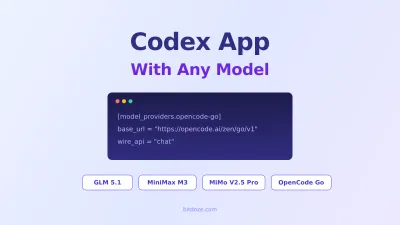
Add to ~/.codex/config.toml:
model = "glm-5.1"
model_provider = "opencode-go"

[model_providers.opencode-go]
name = "OpenCode Go"
base_url = "https://opencode.ai/zen/go/v1"
env_key = "OPENCODE_API_KEY"
wire_api = "chat"
Who this is for
Go makes sense if:
- You do not want to manage multiple API keys and billing dashboards
- You are based outside the US and want low-latency access to models (the Singapore and EU endpoints help)
- You want a predictable monthly cost instead of per-token billing
- You use multiple agents (OpenCode + Pi + Hermes + Mastra + Agno) and want one key for all of them
Go does not make sense if:
- You only use one or two models and already have cheap API access
- You need models not on the list (like Claude or GPT-4)
- You are doing heavy production work that needs unlimited or very high limits
How it compares to managing your own keys
I ran the numbers for my own usage. I typically use MiniMax M2.7 and DeepSeek V4 Pro through their direct APIs. My monthly cost with direct API keys was around $15-20 depending on how much I used agents that month.
With Go at $10/month, I get access to those same models plus others I would not have bothered setting up. The limits are generous enough that I have not hit them once in three weeks of daily use.
The trade-off is control. With direct API keys, I can switch providers if one goes down. With Go, I am relying on the OpenCode team to handle failover. In practice, I have not had any downtime issues, but it is worth noting.
How does Go compare to OpenRouter?
OpenRouter is a pay-per-token aggregator. You load credits and pay for what you use. Go is a flat monthly subscription with usage caps. If you use a lot of tokens, Go is cheaper. If you use very few tokens, OpenRouter might be cheaper. Go also includes models from providers that are not on OpenRouter.
Can I use Go with tools other than OpenCode?
Yes. The Go endpoint is OpenAI-compatible. Any tool that supports custom OpenAI-compatible endpoints can use it. This includes Hermes Agent, OpenClaw, Pi Agent, Mastra, and others. Set the base URL to https://opencode.ai/zen/go/v1/chat/completions and use your Go API key.
What happens if I hit the usage limits?
Requests get blocked until the limit resets. The 5-hour limit resets on a rolling basis. If you have credits on your Zen balance, you can enable the “Use balance” option to keep going after hitting Go limits.
Is my code used for training?
OpenCode says providers on Go do not train on your prompts. Most models keep zero retention; Grok 4.5 and GPT 5.6 Luna retain logs for 30 days. That is their policy statement; I have not independently audited it.
My take after three weeks
If you already have cheap direct keys and only use one model, Go is optional. Nice, not life-changing. For me the win is simplicity: one invoice, one key, and it works in every agent I already run.
If you are still pasting five API keys around, start with the $5 first month. I leave Grok 4.5, GPT 5.6 Luna, and Kimi K3 for the hard stuff, MiniMax M3 or GLM-5.2 for normal agent sessions, and DeepSeek Flash or MiMo when I just need volume.
Get $5 in Free CreditsRelated articles
- Build Your Own AI Agent with Mastra — full guide using OpenCode Go with Mastra
- How to Use the Codex App with Any Model — run Go models inside the Codex app
- OpenCode Setup Guide: Install and Configure on a VPS — full installation walkthrough
- OpenCode vs Pi Agent: Which Terminal Coding Agent to Use — side-by-side comparison
- Best Cheap Models for AI Coding Agents — model pricing and benchmarks
- GitHub Copilot Alternatives After the June 2026 Pricing Change — what to switch to