Best AI Coding Tools and Agents in 2026 (Compared)
Compare the best AI coding tools and agents in 2026: Claude Code, Codex, Copilot, Cursor & more. Pricing, free tiers, and honest picks for every workflow.
 Dragos25 min read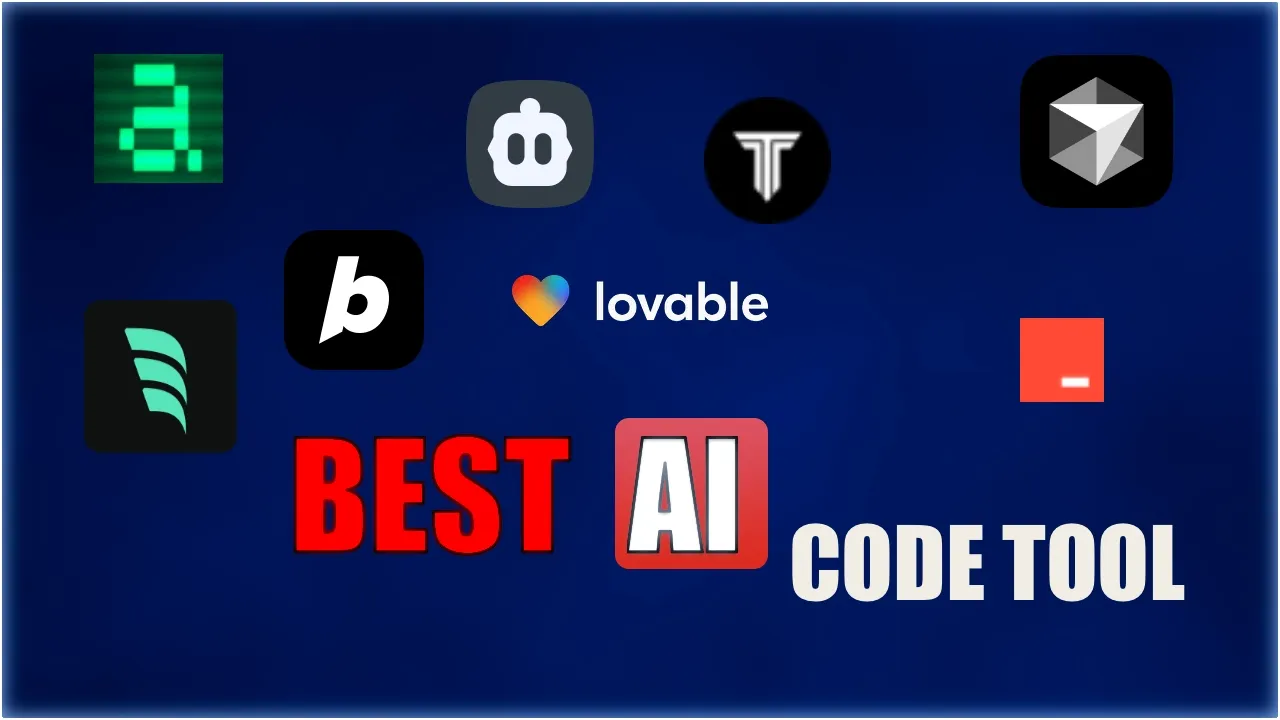
The AI coding tools market has shifted hard since last year. What used to be autocomplete and chat-in-the-sidebar is now agentic coding: multi-file autonomous edits, cloud agents that open PRs, and issue-to-production flows. The best AI coding tools in 2026 don’t just suggest the next line; they refactor entire modules, run your test suite, and ship code while you review.
If you’re getting started programming with AI or you’ve been using AI coding assistants for a while, the landscape looks very different now. Three new players (Claude Code, OpenAI Codex, and Google Antigravity) have joined GitHub Copilot and Cursor as the dominant AI coding agents. Most tools have moved to credit or usage-based billing. The real pain points have shifted from “will it generate good code?” to “how do I keep my token bill sane?” and “how do I verify that the agent didn’t break working code?”
What's changed in 2026
Agentic coding is now mainstream. Claude Code, Codex, and Antigravity handle multi-file edits autonomously. Most major tools (Copilot, Codex, Augment, Cursor, Replit) have moved to credit or usage-based billing. Three dominant new players entered the market alongside Copilot and Cursor.
What are AI coding tools and assistants?
AI coding tools use large language models to help you write, review, debug, and ship code. In 2026, they’ve evolved into four distinct categories, though the lines between them have blurred. Cursor has cloud agents, Copilot has cloud agents, and Codex ships as both a CLI and a cloud service.
1. Web tools
Browser-based platforms for building apps without a local setup. These range from quick prototyping tools to full-stack builders that handle databases, auth, and deployment.
Examples: v0.dev, bolt.new, lovable.dev, Replit, Tempo, Databutton
2. VS Code extensions
AI agents that run inside VS Code or VS Code forks. This is where most professional developers interact with AI daily: inline completions, chat panels, and autonomous editing modes.
Examples: GitHub Copilot, Cline, Kilo Code, Augment Code, Amp Code (free AI coding agent)
3. Dedicated AI-first IDEs
Purpose-built editors with deep AI integration. They’re optimized for AI-assisted workflows and tend to have the tightest model integration.
Examples: Cursor, Devin Desktop (formerly Windsurf), Trae, Zed, Amazon’s Kiro AI IDE
4. Terminal and agentic CLIs
The hottest category in 2026. These tools run in your terminal, edit across your entire codebase, run tests, and some spin up cloud VMs to produce PRs. The lines between “CLI” and “cloud agent” have blurred: Codex has both a local CLI and cloud background agents, Copilot has a cloud agent, and Claude Code runs sub-agents in parallel.
Examples: Claude Code, OpenAI Codex, Google Antigravity, Aider, Goose, OpenCode (open-source Claude Code alternative), Factory Droid CLI
| Category | Best for | Typical users |
|---|---|---|
| Web tools | Prototypes, MVPs, full-stack apps | Founders, product teams, non-coders |
| VS Code extensions | Daily coding, existing workflows | Professional developers |
| Dedicated IDEs | Full-time AI-assisted dev | Teams deep on AI integration |
| Terminal and agentic CLIs | Autonomous edits, CI/headless, git workflows | Backend devs, DevOps, terminal-first engineers |
What should you look for in AI code tools?
The evaluation criteria have shifted. Code quality and language support still matter, but two new factors dominate the 2026 decision: how the billing works, and how much review work the tool creates for you.
1. Code generation and agentic capabilities
- Quality of output: How accurate and maintainable is the generated code?
- Language and framework support: Does it cover your stack?
- Context understanding: Can it work across your codebase, not just the open file?
- Autonomous multi-file edits: Can it refactor across files without hand-holding?
- Sub-agents and parallel tasks: Can it run background jobs or spin up cloud VMs?
- Headless / CI mode: Can it run in pipelines without a GUI?
2. Integration and workflow
| Feature | Why it matters |
|---|---|
| IDE integration | Works inside your existing editor |
| Git support | Commits, branches, PRs handled by the agent |
| Multi-file editing | Handles complex refactors |
| Cloud agent | Spins up background VMs to produce PRs (Codex Cloud, Copilot cloud agent, Cursor Bugbot) |
| CLI access | Terminal-first workflows for servers and CI |
3. AI model and performance
- Model quality: GPT-5.5, Claude Opus 4.8, Gemini 2.5, and their cheaper variants (Haiku, GPT mini, Flash).
- Multi-model switching: Copilot, Cursor, and Cline all let you pick models. This matters when you want cheap models for routine edits and powerful ones for complex refactors.
- Context window: Claude Code’s 1M-token context is a real differentiator for large codebases.
- Response time: Codex Cloud runs at ~240 tokens/second, roughly 2.5x faster than Claude Opus.
4. Security and privacy
- Code privacy: Where does your code go? Is it used for training?
- Training opt-out: GitHub Copilot Free/Pro/Pro+ trains on your code by default (since April 2026). Business and Enterprise plans don’t train. Cursor has privacy mode. Augment Business plans don’t train either. This is a concrete, actionable differentiator. Check the settings.
- Network egress: Sandboxed agents (Codex CLI blocks network by default) vs. open agents that can hit any endpoint.
For more on protecting your site from AI scrapers, see our guide on blocking AI crawlers.
5. Cost and usage-based billing
This is the single biggest change in 2026. Most tools have moved from flat subscriptions to credit or token-based billing:
- GitHub Copilot moved to “GitHub AI Credits” (1 credit = $0.01) on June 1, 2026.
- OpenAI Codex moved to token-based billing on April 2, 2026.
- Augment Code switched to credits in October 2025.
- Cursor has on-demand usage billing on top of subscriptions.
- Replit uses effort/credit-based pricing.
Watch your token burn
Agentic coding burns 3-4x more tokens than autocomplete. Claude Code in particular uses significantly more tokens than Codex for similar tasks. If you’re on API billing, set a hard spend limit on the provider’s billing page. Prefer flat-rate Max plans for heavy use. They’re far cheaper than equivalent API billing. For cheaper GitHub Copilot alternatives, consider Cline or Kilo Code with your own API keys.
Concrete advice:
- Set budget alerts. Copilot has alerts at 75/90/100% of your budget. Enable them.
- Prefer flat-rate plans (Copilot Max $100, Claude Max $100-200) over API billing for heavy use.
- Use cheap models for routine tasks: Haiku, GPT mini, Gemini Flash for autocomplete and style edits. Save Opus/GPT-5.5 for complex refactors.
- Unsupervised agents can burn 10-50x more tokens than interactive sessions. Don’t let agents run wild.
6. Review burden and verification
Here’s the uncomfortable truth: AI coding agents break things. A 2026 study found that 75% of AI coding agents broke previously working code during CI workflows. Devin’s vendor-claimed 67% PR merge rate dropped to 15% real-world success in independent testing (Answer.AI, 20 tasks).
- Write tight, scoped tickets — don’t give agents vague instructions
- Require tests — agents should run and pass your test suite before you review
- Review PRs line by line — don’t trust “looks good” auto-approvals
- Run the full test suite locally after the agent finishes
- Scope API tokens to the minimum needed
- Block network egress by default for sandboxed agents
- Use CLAUDE.md, AGENTS.md, or .cursor/rules to pin build/test/lint commands
7. Enterprise requirements
- Team management: Roles, permissions, seat limits
- Audit trails: Activity logging for compliance
- SSO / SAML: Required for most orgs
- Data residency: EU/US options matter for GDPR
Best AI coding tools and agents
The lines between IDE, CLI, and cloud agent have blurred. Cursor has cloud agents, Copilot has a cloud agent, and Codex ships as both a local CLI and a cloud service. I’ve organized by category, but keep in mind that many tools now span multiple categories.
Master comparison table
| Tool | Category | Rating | Free option | Price range | Best for |
|---|---|---|---|---|---|
| v0.dev | Web | ⭐⭐⭐⭐½ | Yes | Free / Team $30 | Full-stack app generation |
| bolt.new | Web | ⭐⭐⭐⭐ | Yes | Free / Pro $25 | Rapid prototyping |
| lovable.dev | Web | ⭐⭐⭐⭐ | Yes | Free / Pro $25 | Full-stack development |
| Replit | Web | ⭐⭐⭐½ | Yes | Free / Core $20 | Learning and prototyping |
| Tempo | Web | ⭐⭐⭐⭐ | Yes | Free / Pro $30 | Issue-to-PR automation |
| Databutton | Web | ⭐⭐⭐⭐ | No | $20+ | Data-driven apps |
| GitHub Copilot | VS Code | ⭐⭐⭐⭐½ | Yes | Free / Pro $10 | General coding (flagship) |
| Cline | VS Code | ⭐⭐⭐⭐½ | Yes | Free (BYOK) | Autonomous coding agent |
| Kilo Code | VS Code | ⭐⭐⭐⭐ | Yes | Free (BYOK) | Roo Code replacement |
| Augment Code | VS Code | ⭐⭐⭐⭐ | Yes | Free / Indie $20 | Large codebases |
| Amp Code | VS Code | ⭐⭐⭐⭐ | Yes | Free | Free agent in editor |
| Cursor | IDE | ⭐⭐⭐⭐½ | Yes | Free / Pro $20 | AI-first development |
| Devin Desktop | IDE | ⭐⭐⭐⭐ | Yes | Free / Pro $20 | Full-stack + cloud agent |
| Trae | IDE | ⭐⭐⭐⭐ | Yes | Free / Pro $10 | Budget AI IDE |
| Zed | IDE | ⭐⭐⭐⭐ | Yes | Free / AI $10 | Performance-focused |
| Amazon Kiro | IDE | ⭐⭐⭐⭐ | Yes | Free / Pro $20 | Spec-driven development |
| Claude Code | CLI | ⭐⭐⭐⭐½ | Limited | Pro $20 / Max $100 | Agentic terminal coding |
| OpenAI Codex | CLI | ⭐⭐⭐⭐½ | Limited | Go $8 / Plus $20 | CLI + cloud agents |
| Google Antigravity | CLI | ⭐⭐⭐⭐ | Yes | Free / AI Pro $20 | Google ecosystem |
| Aider | CLI | ⭐⭐⭐⭐½ | Yes | Free (BYOK) | Git-based development |
| Goose | CLI | ⭐⭐⭐⭐ | Yes | Free (BYOK) | Local/secure development |
| OpenCode | CLI | ⭐⭐⭐⭐ | Yes | Free (BYOK) | Self-hosted agent |
Web tools
v0.dev (⭐⭐⭐⭐½)
v0 has evolved from a UI component generator into a full-stack app builder. It now handles databases, tasks, and complete applications, not just React components. The credit model uses v0 Mini/Pro/Max model tiers, and you get $5 in credits per month on the free plan with a 7 messages/day limit.
Pricing (Aug 2026):
- Free: $0, $5 credits/month, 7 messages/day
- Team: $30/user/month
- Business: $100/user/month
- Enterprise: Custom
The old $20 “Premium” tier no longer exists. If you need more than the free tier, you’re jumping to $30/user for Teams.
Best for: Rapid UI prototyping, full-stack app generation, non-coders building MVPs.
bolt.new (⭐⭐⭐⭐)
StackBlitz’s bolt.new lets you prompt, run, edit, and deploy full-stack apps directly in the browser. The pricing has been streamlined. The old Pro 50/100/200 tiers are gone.
Pricing (Aug 2026):
- Free: 300K daily tokens (1M monthly)
- Pro: $25/month (10M tokens)
- Teams: $30/member/month
- Enterprise: Custom
Tokens roll over for one month. That’s a nice touch for intermittent use.
Best for: Startups building MVPs, solo developers, proof-of-concept projects.
lovable.dev (⭐⭐⭐⭐)
Lovable moved to a credit-based model. “Plan Mode” uses 1 credit per message. Credits expire after 2 months, so don’t hoard them.
Pricing (Aug 2026):
- Free: 5 credits/day (~30/month)
- Pro: $25/month (100 credits)
- Business: $50/month
- Enterprise: Custom
Best for: Full-stack developers, agencies, rapid prototyping with team collaboration.
Replit (⭐⭐⭐½)
The biggest pricing shift of any tool in this article. Replit Core went from $25 to $20/month, and the new Replit Pro tier at $100/month targets power users. Replit Agent uses effort-based credits.
Pricing (Aug 2026):
- Starter: Free
- Core: $20/month ($18 annual)
- Pro: $100/month ($90 annual)
- Enterprise: Custom
Best for: Students, educators, quick prototyping, collaborative coding.
Tempo (⭐⭐⭐⭐)
Tempo pivoted from “React builder” to “AI agents that turn feedback and issues into reviewed PRs.” That’s a significant change. It’s now competing with the agentic tools rather than the web builders.
Pricing (Aug 2026):
- Free: 30 prompts (5/day)
- Pro: $30/month (150 prompts)
- Scale: $50/month (250 prompts)
- Ultimate: $100/month (555 prompts)
- Agent+: $4,500/month
Best for: Teams wanting automated issue-to-PR workflows.
Databutton (⭐⭐⭐⭐)
Databutton now tiers its offering around agent access plus varying levels of human support.
Pricing (Aug 2026):
- Agent + Community: $20/month
- Agent + Human advisor: $699/month
- Agent + Human devs: $1,999/month
The jump from $20 to $699 is steep. You’re paying for human expertise, not just the AI.
Best for: Data-driven apps, analytics dashboards, Python/FastAPI backends.
If you want a free alternative for building web apps without subscriptions, check out Freebuff Web — a free AI app builder with no subscription or API keys needed.
How do web-based AI coding tools compare?
Web tools are best for prototyping and MVPs — they handle deployment, databases, and auth out of the box. But they lock you into their platform. For production apps you’ll maintain long-term, a local IDE or CLI tool with proper version control is usually the better bet. Use web tools to validate an idea fast, then move to your own stack.
VS Code extensions
GitHub Copilot (⭐⭐⭐⭐½) — flagship
GitHub Copilot is now the most feature-rich option in this category. The free tier is available to everyone (not just students/OSS), and the tool has expanded from autocomplete into a full agentic platform with cloud agents, code review, and third-party agent integration.
Key features:
- Multi-model support (Claude, GPT, Gemini — you pick per task)
- Agent mode for autonomous multi-file edits
- Cloud agent (spins up background VMs for complex tasks)
- Copilot CLI (
gh copilot suggest "add rate limiting") - Code review on pull requests
- Third-party agent integration (Claude Code, Codex)
AGENTS.mdfile for repo-level instructions
Pricing (Aug 2026):
- Free: $0 — 2,000 completions + 50 premium requests/month (for everyone)
- Pro: $10/month
- Pro+: $39/month
- Max: $100/month
- Business: $19/user/month
- Enterprise: $39/user/month
Copilot moved to usage-based billing with “GitHub AI Credits” (1 credit = $0.01) on June 1, 2026. If you’re a heavy user, the GitHub Copilot Pro plan at $10 is still the best entry point. For heavier use, look at Max at $100 or consider cheaper GitHub Copilot alternatives like Cline.
Privacy note: Copilot Free/Pro/Pro+ trains on your interactions by default since April 2026. Opt out in settings. Business and Enterprise plans don’t train.
Best for: Individual developers, enterprise teams, anyone wanting the broadest feature set in one tool.
Cline (⭐⭐⭐⭐½)
Cline remains free and open-source (Apache-2.0, ~66k GitHub stars). It’s positioned as an “autonomous coding agent” available as an SDK, IDE extension, or CLI assistant. You only pay for the API tokens you use.
Cline is free
Cline is free — you only pay for the API tokens you use. Point it at Ollama for zero cost. It supports Plan/Act modes for controlled autonomous editing.
Key features:
- Autonomous code generation with human-in-the-loop control
- Multi-file editing and project-wide refactoring
- Terminal command execution and browser automation
- Custom tool creation via Model Context Protocol (MCP)
- Plan/Act modes for step-by-step or fully autonomous operation
Best for: Professional developers who want maximum control, self-hosters running local models, anyone allergic to subscriptions.
Kilo Code (⭐⭐⭐⭐) — new, replaces Roo Code
Roo Code shut down on May 15, 2026 (repo archived read-only). Kilo Code is the open-source successor fork — a drop-in replacement. Free extension, you pay model API at cost with no markup.
Best for: Former Roo Code users, developers wanting a free VS Code agent with BYOK (bring your own key).
If you want to run with affordable open-source LLM coding alternatives, Kilo Code pairs well with local models.
Augment Code (⭐⭐⭐⭐)
Augment switched to credit-based billing in October 2025. It’s SOC 2 Type II certified and Business plans guarantee no AI training on your code.
Pricing (Aug 2026):
- Free (trial): Limited
- Indie: $20/month
- Business: $100/month flat (up to 50 seats)
Best for: Enterprise teams managing large codebases, organizations needing SOC 2 compliance.
Amp Code (⭐⭐⭐⭐) — new
Amp Code is a free AI coding agent that works directly in your editor. Good free-tier option if you want an agentic experience without paying for another subscription.
See our full Amp Code guide for setup and features.
Best for: Developers wanting a free agent experience in their editor.
Dedicated AI-first IDEs
Cursor (⭐⭐⭐⭐½)
Cursor has expanded significantly. The Hobby tier is still free, and they’ve added Pro+ and Ultra tiers for power users. Cloud agents and Bugbot (autonomous bug-fixing) are the headline features now.
Key features:
- Built-in AI chat, inline editing, and agent mode
- Cloud agents for background tasks
- Bugbot for autonomous bug fixes
.cursor/rulesfile for pinning build/test/lint commands- VS Code extension compatibility
- Usage-based on-demand billing
Pricing (Aug 2026):
- Hobby: Free
- Pro: $20/month
- Pro+: $60/month
- Ultra: $200/month
- Teams: $40/user/month
- Enterprise: Custom
Best for: Developers who want the tightest AI-IDE integration, teams doing full-time AI-assisted development.
Devin Desktop (formerly Windsurf) (⭐⭐⭐⭐)
Windsurf was acquired by Cognition (the Devin company) in late 2025 (~$250M, per CNBC) and rebranded to Devin Desktop on June 2, 2026. The windsurf.com/pricing URL now redirects to devin.ai/pricing. It combines the IDE experience with Devin’s cloud agent capabilities.
Pricing (Aug 2026):
- Free: $0
- Pro: $20/month
- Max: $200/month
- Teams: $80/month + $40/seat
- Enterprise: Custom
Devin cloud features use ACU-based billing (Agent Compute Units). If you’re just using the IDE locally, the Pro $20 tier covers most needs.
Best for: Full-stack developers, teams wanting IDE + cloud agent in one tool.
Trae (⭐⭐⭐⭐)
ByteDance’s entry into the AI IDE space. The pricing is aggressive — $3/month for Lite and $10/month for Pro makes it the cheapest paid AI IDE.
Pricing (Aug 2026):
- Free: ~5,000 autocompletions/month + premium models
- Lite: $3/month
- Pro: $10/month (600+ premium requests)
- Enterprise: Custom
Best for: Budget-conscious developers, anyone wanting AI IDE features without the $20/month Cursor price tag.
Zed (⭐⭐⭐⭐)
The editor itself is free and open-source, built in Rust. Zed AI is the optional paid layer.
Pricing (Aug 2026):
- Editor: Free, open-source
- Zed AI: $10/month (unlimited edit predictions + $5 of tokens, usage-based beyond)
- Business: $30/seat/month
Best for: Performance-focused developers, terminal enthusiasts, open-source contributors.
Amazon Kiro (⭐⭐⭐⭐) — new
Kiro is Amazon’s spec-driven agentic IDE, built on Code OSS. It replaces Amazon Q Developer (which stopped accepting new sign-ups on May 15, 2026). Kiro went GA in March 2026.
The spec-driven approach is interesting — you write specs and Kiro generates implementation plans before writing code. Read more in our Amazon Kiro AI IDE deep dive.
Pricing (Aug 2026):
- Free: 50 credits/month
- Pro: $20/month (1,000 credits)
- Pro+: $40/month
- Pro Max: $100/month
- Power: $200/month
- Enterprise: Custom
Best for: AWS-heavy teams, developers wanting structured/spec-driven AI workflows.
Cursor vs Devin Desktop vs Kiro — which IDE should I pick?
Cursor is the mature, feature-rich choice with the largest ecosystem. Devin Desktop brings cloud agent capabilities (autonomous PRs) into the IDE. Kiro’s spec-driven approach suits teams that want structured, plan-first AI development. For most solo developers, Cursor Pro at $20 is the default pick. For teams already on AWS, Kiro’s free tier is worth trying first.
Terminal and agentic CLIs
This is the hottest category in 2026. These tools run in your terminal, edit across your entire codebase, run tests, and some spin up cloud VMs to produce PRs. If you spend most of your day in a terminal, these are where the real productivity gains are.
Claude Code (⭐⭐⭐⭐½) — new, flagship
Anthropic’s terminal-first agent. Claude Code has a 1M-token context window, handles multi-file refactors, and can spawn sub-agents for parallel tasks. Claude Opus 4.8 scored 88.6% on SWE-bench Verified (one of the highest published scores).
Key features:
- 1M-token context window (largest in class)
- Multi-file refactors with full project understanding
- Sub-agents for parallel task execution
CLAUDE.mdfile for repo-level rules- Headless/CI mode:
claude -p "fix the failing tests" --output-format json
Pricing (Aug 2026):
- Free: Limited (with weekly caps)
- Pro: $20/month (light use, included with Claude subscription)
- Max 5x: $100/month
- Max 20x: $200/month
- API: Pay-as-you-go (Opus 4.8 ≈ $5/M input, $25/M output)
Claude Code token burn
Claude Code uses 3–4x more tokens than Codex for similar tasks. If you’re on API billing, set a hard spend limit on the Anthropic billing page. For heavy use, the Max plans are far cheaper than equivalent API billing.
Install and get started:
npm install -g @anthropic-ai/claude-code
cd your-project
claude                    # interactive mode
claude -p "explain this repo" --output-format json   # headless/CI
Auth: claude prompts for Claude Pro/Max login, or set ANTHROPIC_API_KEY for API billing.
Best for: Terminal-first developers, complex multi-file refactors, large codebases.
OpenAI Codex (⭐⭐⭐⭐½) — new, flagship
OpenAI’s dual offering: an open-source CLI (openai/codex, Apache-2.0, ~105k GitHub stars, written in Rust) and Codex Cloud (parallel background VMs that produce PRs at ~240 tokens/second). GPT-5.5 scores 88.8% on Terminal-Bench 2.1.
Key features:
- Open-source CLI (Apache-2.0)
- Codex Cloud: background VMs that produce PRs
- ~240 tok/s throughput (roughly 2.5x faster than Claude Opus)
- Sandbox network off by default (Docker/LocalStack blocked unless explicitly enabled)
codex execfor non-interactive / CI use
Pricing (Aug 2026):
- Go: $8/month
- Plus: $20/month (bundled with ChatGPT Plus, 5-hour caps)
- Pro 5x: $100/month
- Pro 20x: $200/month
- Business: $25/user/month
- Token-based billing since April 2, 2026
Install and get started:
npm install -g @openai/codex
cd your-project
codex                       # interactive TUI
codex exec "fix the failing tests"   # non-interactive / CI
Auth: codex login (ChatGPT sign-in) or set OPENAI_API_KEY.
You can also use the Codex app with any model for more flexibility.
Best for: Developers wanting CLI + cloud agent flexibility, teams already in the OpenAI ecosystem, CI/CD pipelines.
Google Antigravity (⭐⭐⭐⭐) — new
Google open-sourced Gemini CLI, then replaced it with Antigravity CLI on June 18, 2026. Antigravity is Google’s agentic IDE/CLI, integrated into the Google ecosystem.
Pricing (Aug 2026):
- Free preview: $0 (Individual)
- AI Pro: $20/month
- AI Ultra: $100–$200/month
- Enterprise: Custom
Best for: Developers in the Google ecosystem, teams using Google Cloud, anyone wanting a free agentic CLI.
Aider (⭐⭐⭐⭐½)
Still the best no-subscription, bring-your-own-key option. Aider is free, open-source, and pairs with any LLM you have API access to. The aider-ce community edition fork is also gaining traction.
Install and get started:
pipx install aider-chat
cd your-project
aider --model sonnet --watch-files
Best for: Terminal power users, git-focused developers, anyone who doesn’t want another subscription.
Goose (⭐⭐⭐⭐)
Block donated Goose to the Linux Foundation (AI Application Foundation). The repo moved to aaif-goose/goose (~52k GitHub stars). Still free and open-source (Apache-2.0), with desktop app, CLI, and API.
Best for: Security-conscious teams, enterprise developers, DevOps engineers, local-first workflows.
OpenCode (⭐⭐⭐⭐) — new
OpenCode is the most-starred open-source coding agent (~193k GitHub stars). It supports 75+ providers, is MIT-licensed, and runs as a terminal, desktop, or IDE agent. Perfect for the self-host, DIY crowd.
Install and get started:
curl -fsSL https://opencode.ai/install | bashSee our full OpenCode setup guide for VPS deployment and configuration.
Best for: Self-hosters, developers wanting maximum provider flexibility, no-vendor-lock-in workflows.
npm install -g @anthropic-ai/claude-code
cd your-project
claude
npm install -g @openai/codex
cd your-project
codexpipx install aider-chat
cd your-project
aider --model sonnet --watch-filescurl -fsSL https://opencode.ai/install | bash
cd your-project
opencodeCost control for AI coding agents
This is the section I wish existed when I started using agentic tools. The shift to usage-based billing means your monthly bill can jump 10–50x if you let agents run unsupervised. Here’s how to keep costs under control.
Set hard spend limits. OpenAI and Anthropic both let you set monthly caps on the billing page. Do this before you start. Copilot has built-in alerts at 75/90/100% of your budget — enable them.
Prefer flat-rate plans for heavy use. If you’re a daily user, Max plans ($100–200/month) are far cheaper than equivalent API billing. The math only works in your favor on API billing if you’re a light, occasional user.
Use cheap models for routine tasks. Save Opus 4.8 and GPT-5.5 for complex refactors. For autocomplete, style edits, and boilerplate, use Haiku, GPT mini, or Gemini Flash. Most tools let you switch models per task.
Route between models. If you want unified access to Claude Code, Codex, and Gemini CLI through a single interface, Agent Router can help — one API key, multiple backends.
Watch unsupervised agents. An agent running in the background can burn through tokens fast. Check in frequently. Set time limits. Don’t let agents iterate on failures endlessly.
Zero-cost stack for self-hosters
Run Cline or OpenCode + Ollama + a local model (Qwen 3.6, Llama 4) on your own hardware. Zero subscription, zero token costs. You pay for hardware and electricity only. See our guide on affordable open-source LLM coding alternatives for model recommendations. You can also explore letting an AI assistant deploy Docker apps from your self-hosted setup.
Self-hosted / no-subscription stack:
- Aider, Cline, OpenCode, Goose, Kilo Code, Continue + Ollama = zero subscription cost
- Point them at local models via
OLLAMA_API_BASEor provider config - Works great for routine edits; switch to cloud models for complex refactors
Why should you use AI coding assistant tools?
The short version: they make you faster, but they don’t make you worse — as long as you verify.
Productivity gains
GitHub’s data shows developers using Copilot are up to 55% more productive on certain tasks. That figure comes from controlled studies and is still the most-cited benchmark in the space. In practice, the gains depend heavily on the task: boilerplate, tests, and documentation see the biggest speedups. Novel architecture decisions? Less so.
Code quality
AI tools standardize patterns, catch bugs early, and generate documentation you’d otherwise skip. They’re particularly good at writing tests — a task most developers underinvest in.
Learning and skill development
Working with AI tools exposes you to patterns, libraries, and approaches you might not discover on your own. It’s like pair programming with someone who’s read every docs page (but occasionally hallucinates).
Cost effectiveness
With free tiers now available from Copilot, Cline, Kilo Code, and others, the barrier to entry is zero. For self-hosters, the Ollama + open-source agent stack costs nothing beyond hardware. Compare that to the $150–300/year most paid plans charge.
The honest downsides
AI coding agents break things. A 2026 study found 75% of agents broke previously working code during CI workflows. Review burden is real — you still need to read every line the agent writes. Token costs can surprise you if you’re not paying attention. And privacy concerns are legitimate: some tools train on your code by default.
Are AI coding tools worth it despite the risks?
Yes, but only with verification discipline and cost controls. Use them for boilerplate, tests, documentation, and rapid prototyping. For production code, treat agent output like a junior developer’s PR — review it line by line, run the full test suite, and don’t merge on autopilot. The productivity gains are real, but so are the failure modes.
Conclusions
No single tool wins everything. Here’s my default recommendation for each use case:
- Best free option: GitHub Copilot Free (for everyone) or Cline/Kilo Code + a free model.
- Best for agentic coding: Claude Code or OpenAI Codex — pick based on ecosystem preference (Anthropic vs OpenAI).
- Best budget IDE: Cursor Pro ($20) or Trae Pro ($10).
- Best for self-hosters: OpenCode or Aider + Ollama.
- Best web tool: v0.dev (full-stack) or bolt.new (prototyping).
- Want the cheapest option? → Copilot Free / Cline + Ollama
- Want maximum power? → Claude Code Max or Codex Pro
- Want it in your terminal? → Codex CLI, Claude Code, or Aider
- Want a web app builder? → v0.dev or bolt.new
- Want zero subscription? → OpenCode or Aider + Ollama + local models
- Want the best all-rounder? → GitHub Copilot Pro ($10) or Cursor Pro ($20)
The tools are only as good as your verification process. Set spend limits, write tight tickets, require tests, and review everything. The agents are fast — but you’re the one responsible for what ships.
Explore more AI tools